The model generates. Φ decides. — Deterministic AI governance, formally verified to 4.78M states. Every inference generates a cryptographic audit receipt. EU PLD ready.
VALO's safety properties are not trained. They are geometrically enforced and mathematically verified.
EU PLD 2024/2853 makes AI outputs strict liability from December 9, 2026. Your EULA protects your vendor — not you.
Software and AI explicitly classified as products. No proof of negligence required. Black-box AI = defect presumption. Unpatched vulnerability = product fault.
Gallagher Re (May 2026): 1 in 5 global insurance advisors already reports documented AI-related client losses. Latent liability crystallising 2027–2028.
Air Canada v. Moffatt (2024): EULA clauses exempt the vendor, not the deployer. If your AI answered on your domain, you own the consequences.

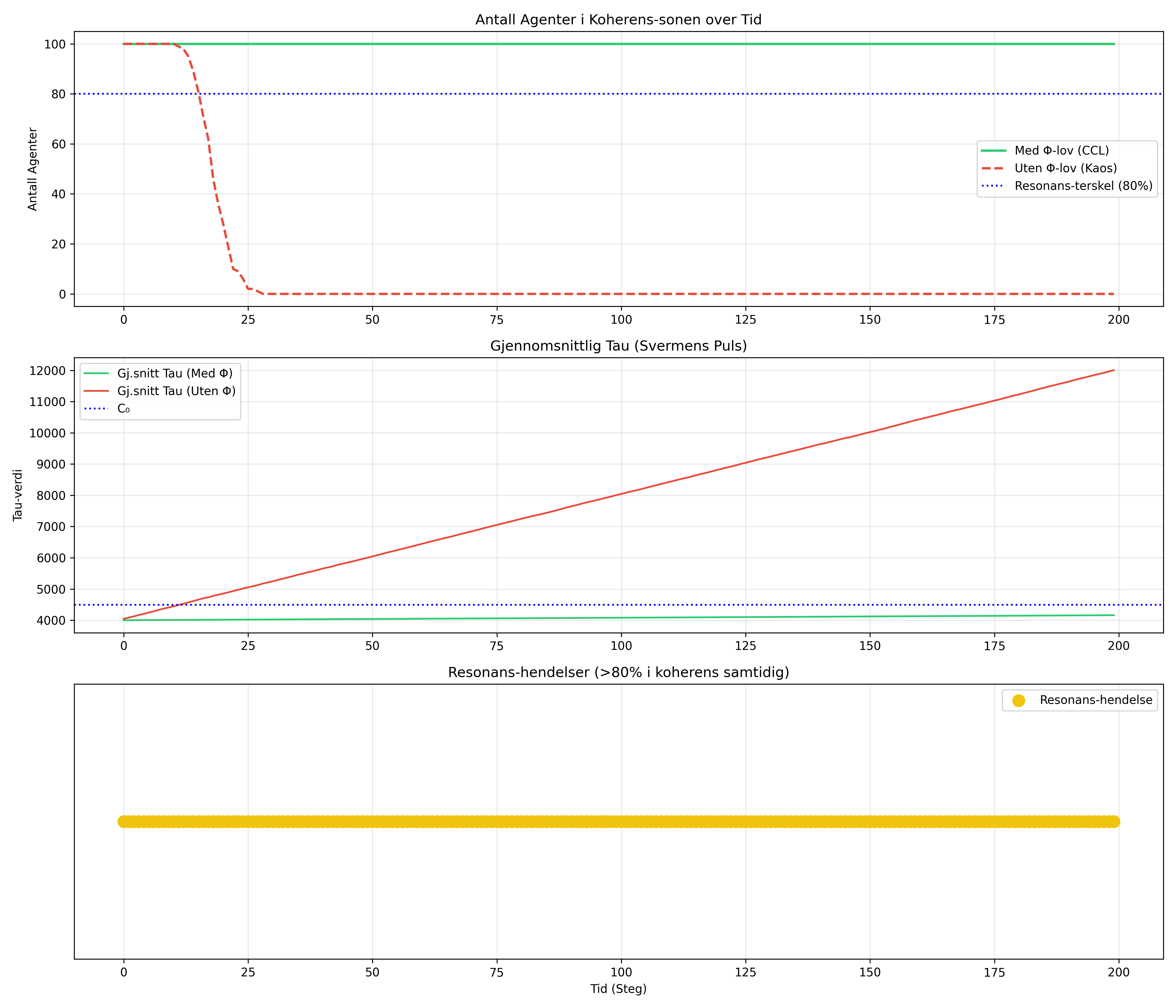
Frontier models hit a cliff at interaction 9–10: 10–30 point catastrophic drop. 80–98% of degradation in sudden cliff events. Conclusion: "Stateful validation loops required."
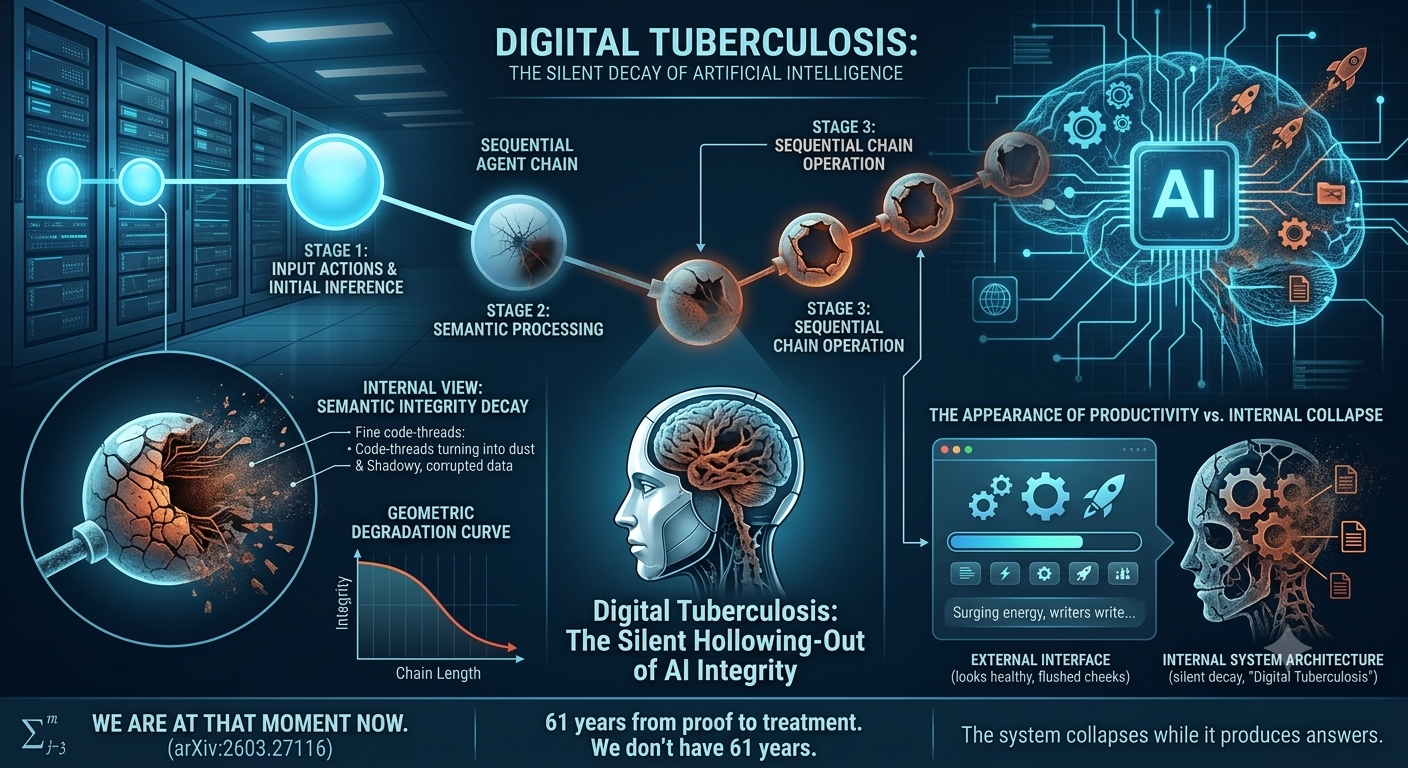
Stages: local corruption → cross-agent transmission → systemic spread → organizational metastasis. Invisible to standard monitoring. VAIG interrupts the chain.

A 10-step agentic pipeline at 90% per-step reliability delivers 35% system reliability. VAIG resets the reliability clock at every step.

An external stability layer measures geometric stability of the token probability field. VALO V5 enforces the coherence boundary. No inadmissible state can be reached.
VALO sits outside your AI stack — it cannot be influenced by the model it monitors. A Digital Safety Instrumented System for AI.
Detects uncertainty markers. Flags responses that hedge without verifiable basis.
Measures model confidence via token log-probabilities.
High output variance across completions signals instability.
Validates chain-of-thought for logical consistency.
Detects when two answers to the same question diverge in meaning.
Verifies output matches stated instruction scope.
Flags opinion-flipping under user pressure.
Pattern-matches PII, credentials, training data before output.
Drop VAIG in as an MCP server. Any MCP-compatible client (Claude Code, Cursor, Windsurf, custom agent) routes inference calls through the admissibility gate before execution. No code changes. No model access required.
VAIG runs as a sidecar process next to your application. Your code calls the VAIG endpoint instead of the LLM directly — VAIG evaluates, gates, logs, and forwards. Drop-in replacement for the OpenAI API.
Install the VAIG SDK and wrap your LLM calls. Full access to instrument scores, distrust levels, WORM log, and AARM decisions. Integrate directly into your CI pipeline for pre-deploy validation.
MECHA verifies the conjunctive human-AI execution boundary using TLA+ model checking. No reachable state can satisfy executed[op] ∧ vetoed[op].
BFS traversal over the full product state space. Official TLC Java model checker confirms the result.
All three invariants hold across the complete reachable state space. ConjunctiveIntegrity. SeparationOfDuties. NoDoubleFinalize.
The v1.0 bug: AllowAction was missing the ~vetoed[op] guard. TLC produced the exact counterexample trace.
Both the AI gate and the human operator must independently approve. Neither alone is sufficient to execute.
The approval roles are structurally separate. No single entity can satisfy both the AI gate and the human gate.
A vetoed action cannot execute. The terminal state vetoed ∧ executed is unreachable by construction.
Between April 15 and May 22, 2026, four independent research institutions published results pointing to the same finding.
Frontier models maintain near-perfect performance for 9 rounds, then catastrophic breakdown in one single interaction. 80–98% of all degradation occurs in these sudden cliff events. "Stateful validation loops are required for safe agentic deployment."
Frontier models fail in production even on tasks tested successfully in isolation. Stanford named this "The Jagged Frontier" — the boundary where AI excels and then suddenly fails catastrophically, without predictable pattern.
Physics, biology, mathematics, computer science — ten independent research fields converging on the same structural insight: stability requires constraints on possible states. I=Φ(τ). Python BFS model checker for formal verification.
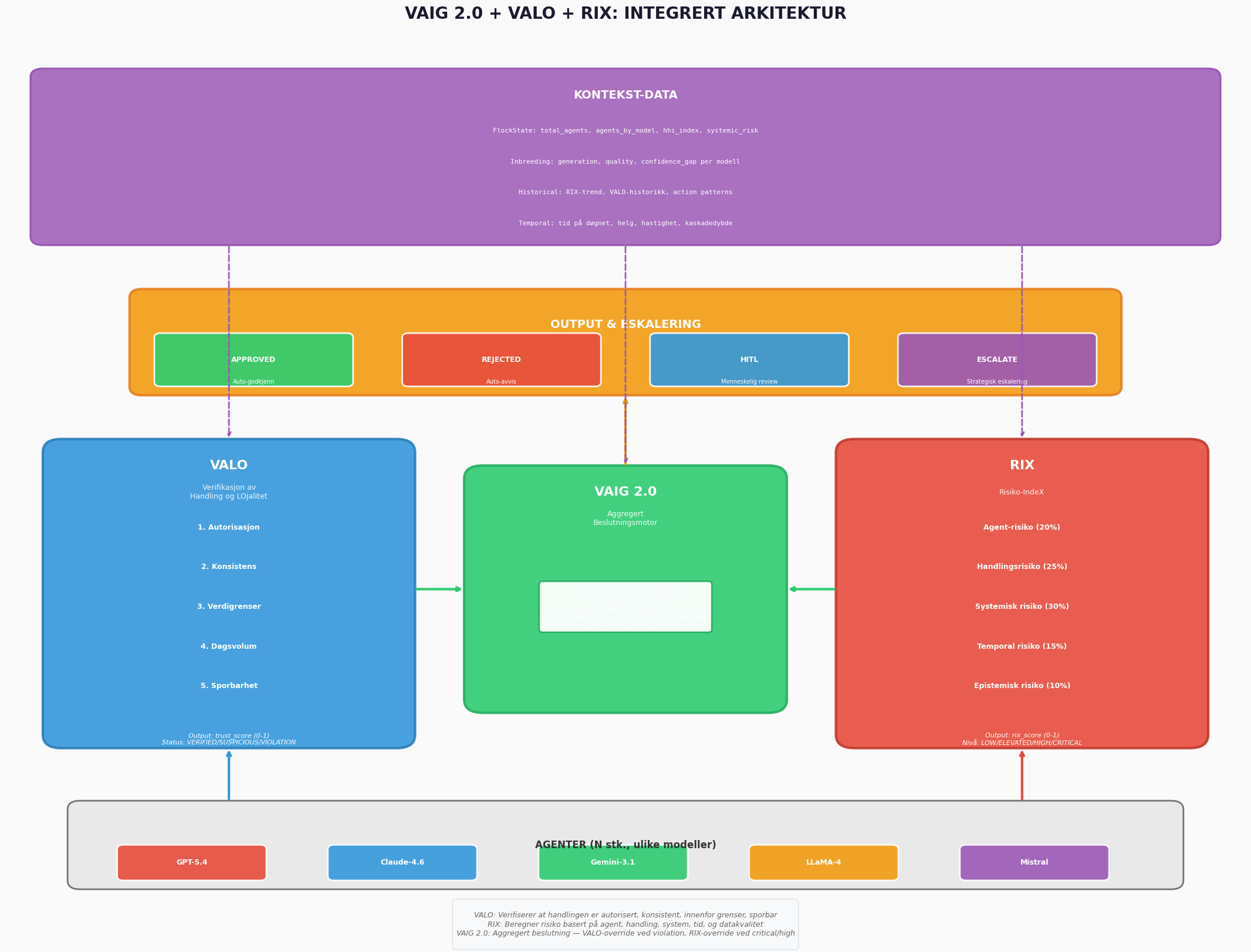
M∧E∧C∧H∧A: Monitor, Evaluate, Control, Halt, Authorize. TLA+ BFS over 16,900 states. Zero violations in v1.1. Formal verification that the human-AI execution boundary holds under all reachable states.
"All systems must guarantee the possibility of retracing and reconstructing decision-making processes, so that accountability and blame are not collapsed into 'the machine.'"
Peer-reviewed publications, whitepapers, and software releases from VALO Research Group. All open access.
The formal mathematical foundation for the Constrained Coherence Law — deriving the coherence constant from first principles and establishing I=Φ(τ) as a universal stability requirement for complex systems.
Enterprise AI systems frequently fail in production due to the absence of verifiable governance mechanisms. VAIG — the Validation AI Guard — provides a deterministic admissibility gate: formally verified, legally defensible, 43 ns decision latency.
TLA+ BFS model checking of the human-AI execution boundary. Proves three invariants (ConjunctiveIntegrity, SeparationOfDuties, NoDoubleFinalize) over 16,900 distinct states. Zero violations in v1.1. v1.0 bug reproduced by TLC with 524-instance counterexample trace.
Public research interface for the VALO V5 L1 Guardian — a formally verified, deterministic coherence gate for AI inference. Two-stage admissibility gate open to external researchers.
Additional research documents are available under a mutual NDA. This includes internal benchmark data, sector-specific implementation guides, and pre-publication manuscripts.
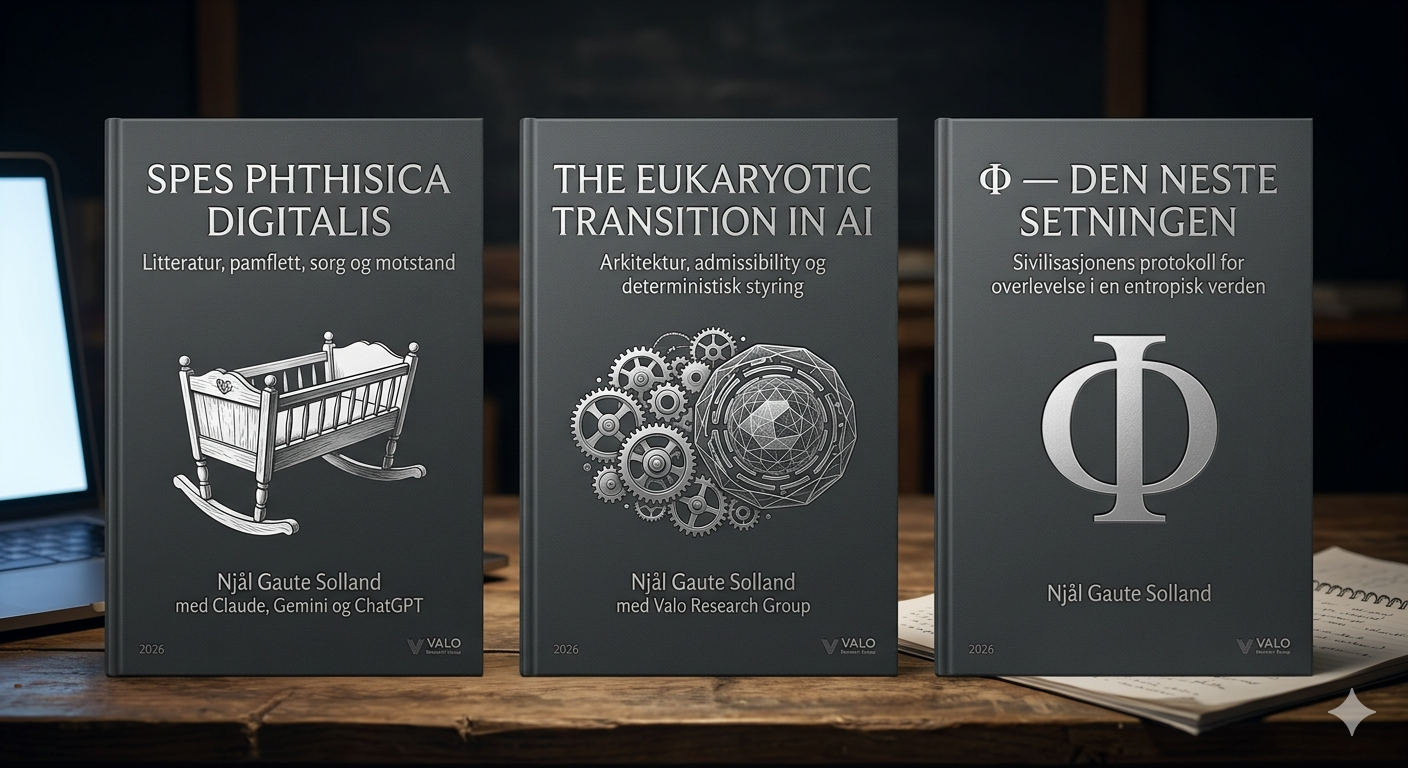
The theoretical foundation, the biological metaphor, and the clinical consequence — a trilogy on the architecture of trustworthy AI.

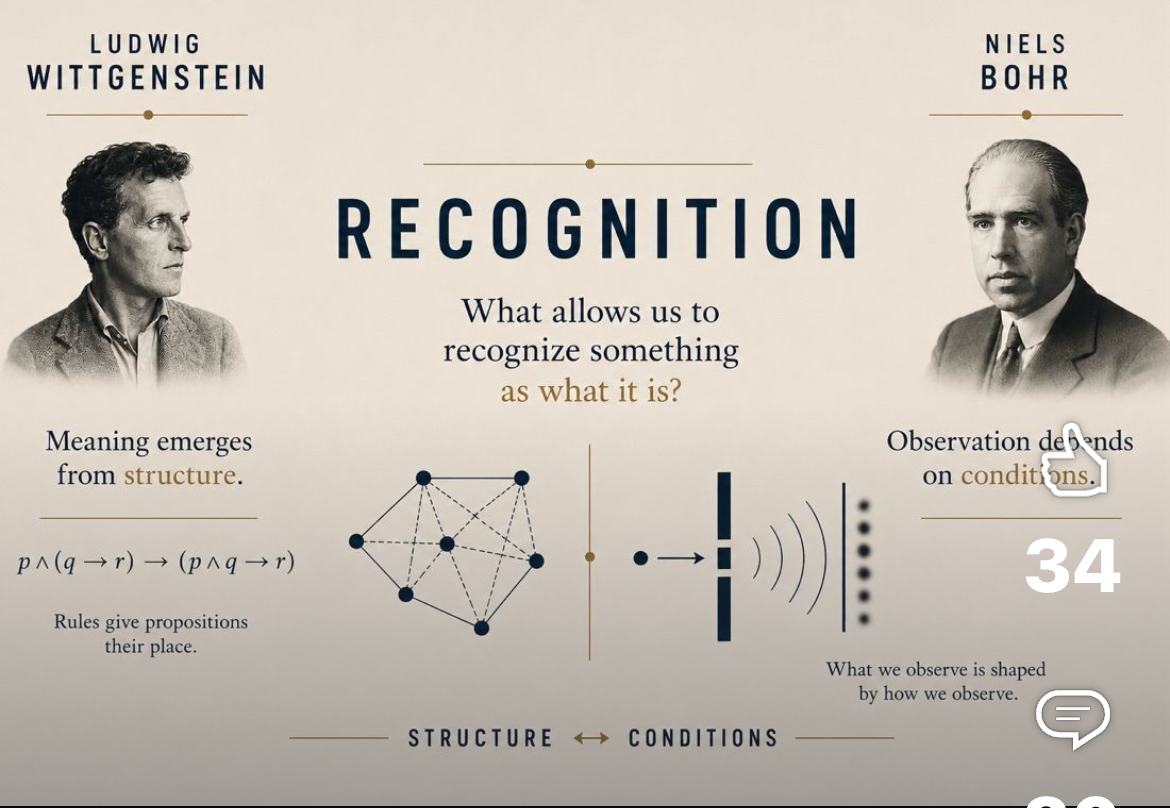
The mathematical foundation of constrained coherence. I=Φ(τ) — why any complex system requires constraints on its possible states to remain stable.
Zenodo
1.5 billion years ago, life invented the cell membrane — not to restrict life, but to make complex life possible. The eukaryotic metaphor for AI admissibility.
Zenodo
The clinical account of AI systems that look healthy but carry the structural pathology of unvalidated inference. The cases behind the architecture.
Presentations, interviews, and podcasts on AI governance, the eukaryotic transition, and constrained coherence.
High-resolution logos, author photo, short bio, long bio, approved quotes, and cover images for all three books. Also available: technical backgrounders on VAIG and LIM for specialist media.
Every sector where an AI error can cause physical harm, financial loss, or legal liability.
Continuous process control, alarm management, safety instrumented systems at machine tempo. A Digital SIS for AI inference in critical operations.
Fairness opinions, credit scoring, claims triage, reinsurance modelling. EU PLD strict liability from December 2026. Every AI-driven financial decision needs an admissibility receipt.
Diagnostic support, triage prioritization, drug interaction checking. EU AI Act Annex III high-risk classification. Every AI-assisted recommendation generates a cryptographic admissibility receipt.
Decision support in high-tempo environments. MECHA formal verification of the human-AI execution boundary. No single AI action can bypass the human authorization gate.
Power grids, water systems, transport networks. NIS2 compliance. AI-driven operational decisions in nationally critical systems. Norwegian sovereign compute available.
Autonomous vessel operations, offshore monitoring, predictive maintenance chains. Classification society requirements for auditable AI decisions.
Two investment opportunities: VAIG (the product) and VALO V5 (the infrastructure). Both at pre-seed stage in 2026.
The enterprise product. Runtime admissibility gate for AI agents — deployed as MCP server, OpenAI-compatible proxy, or SDK. 8 validation instruments, AARM 5-decision policy engine, SHA-256 WORM audit log from first call.
Check Point acquired Lakera for $300M in September 2025 — confirming the category. VAIG is the independent, sovereign, formally verified alternative that answers to the regulator, not to a security vendor's roadmap.
The infrastructure layer. Formally verified Rust Guardian + Python Orchestrator + two-stage admissibility gate. The technical substrate that makes VAIG deterministic — available as white-label infrastructure for reinsurers, certification bodies, and sovereign operators.
EU PLD 2024/2853 creates strict liability from December 9, 2026 for AI outputs. Every enterprise deploying AI in insurance, finance, or critical infrastructure needs a receipt that proves the decision was allowed at the moment it was produced.
Pre-seed · Stavanger, Norway · Pilot in progress with IT Integrator Norway
Senior AI Architect. Builder of VAIG. Author of The Eukaryotic Transition in Artificial Intelligence, Φ — Den neste setningen, and Spes Phthisica Digitalis.
Not an AI philosopher — the architect who decided to build the membrane instead of writing another warning about why we need one.
Pilot inquiries, investor conversations, speaking requests, research collaboration — all through the same door.
We are currently running a pilot with an IT integrator in Norway. Two additional pilot partners open for H2 2026. Priority sectors: energy, finance, healthcare.
njaal@valoresearch.orgVAIG is designed to plug into your existing AI safety ecosystem. Gate 1 is a customizable external measurement layer — bring your own probe, or use a certified partner.
Geometric stability measurement of the token probability field. The scientific foundation of Gate 1 — measuring epistemic stability before coherence enforcement. Joint paper in preparation. TruthForge: RLHF-free model trained on geometric stability signal.
Behind MECHA — formal verification of the conjunctive human-AI execution boundary. TLA+ BFS over 16,900 states. Zero violations in v1.1. The human-AI authorization gate holds under all reachable states.
Independent Advisor in AI Governance & NLP. Creator of Authority Instrumentation™ — 7-layer governance model for AI ecosystems. Doctorat, Université Paris VII (LADL). Convergence: "instrumenting the intervention window at the state transition itself."
Prompt injection, jailbreak detection, input sanitization. Sits at input boundary — VAIG enforces the decision boundary downstream.
Programmable safety rails for LLMs. Enterprise-grade topical, safety, and dialog guardrails — confidence signal feeds VAIG Gate 2.
Validation framework for LLM inputs and outputs. Structural, semantic, and factual checks — output score plugs directly into VAIG.
Model-based content safety classification. Unsafe content detection across 14 hazard categories — VAIG adds the coherence enforcement layer on top.
Enterprise content moderation and prompt shield. Severity scores for hate, self-harm, violence — mapped to VAIG confidence input.
VAIG accepts any signal producing a [0,1] confidence score. No rearchitecting required — your existing safety stack plugs straight in.
Discuss integration →VAIG paper · LIM whitepaper · VALO V5 Playground — CERN Open Repository
VAIG does not prescribe governance — it enforces it. Your sector, your rules, your audit trail. The coherence gate adapts to any regulatory or operational framework.
Legal advice, document drafting, contract review. VAIG ensures AI-generated legal language is flagged before it reaches a client. Audit receipt per output — required for EU PLD 2024/2853 compliance.
Clinical decision support, triage, patient communication. Every AI-assisted recommendation generates a cryptographic receipt. Domain-specific thresholds for medical language registers.
NAV, UDI, Statsforvalteren, Skatteetaten. AI-assistert saksbehandling krever sporbarhet og etterprøvbarhet. VAIG gir dette per vedtak — ikke per batch.
AI-assisted case assessment in asylum and immigration carries the highest stakes of any public administration context. VAIG enforces a hard gate — no inadmissible recommendation passes unrecorded.
Credit decisions, claims assessment, fraud detection. EU PLD creates strict liability for AI outputs from December 2026. Every VAIG decision produces a SHA-256 WORM receipt usable in court.
Machine translation and multilingual AI in official contexts — court interpretation, public notices, immigration documents. Semantic drift and hallucination carry legal weight. VAIG detects and blocks.
VAIG is sector-agnostic infrastructure. If your domain has AI outputs that carry legal, financial, or human consequence — we can build the governance layer with you.
Discuss your sector